Food & Water
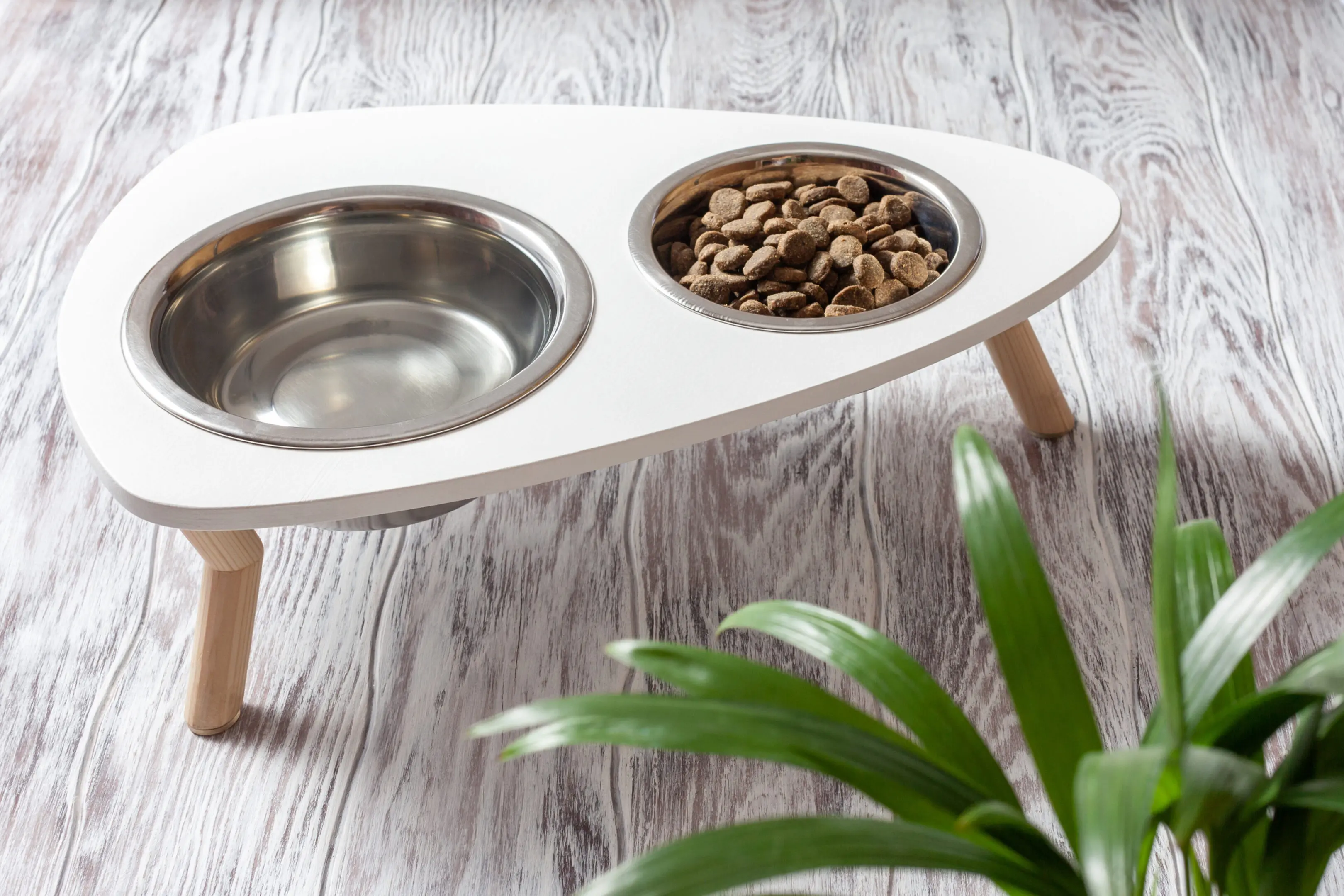
Your puppy is currently on Purina Pro Plan Puppy Food , served dry. If you prefer, you may hydrate the kibble with water or goat’s milk. We recommend continuing puppy food until at least 8 months of age, although keeping them on it for up to a year is ideal. Be sure to follow the portion guidelines on the packaging and divide the daily amount into two or three meals. If you choose to transition to a different brand, gradually mix the new food with Purina Pro Plan over the course of a week to ensure a smooth adjustment. Please note, grain-free diets are not recommended.
Your puppy should consume at least one ounce of water per pound of body weight each day. Monitoring water intake is essential, as it plays a key role in successful potty training. In many cases, excessive indoor accidents stem from unmonitored water consumption.
Potty Training
Your puppy has been litter box trained, and I will be sending a bag of litter pellets home with you. Place the pellets in the designated potty area you’ve chosen and guide your puppy to that spot consistently. The familiar scent of the pellets will help your puppy associate the area with their training at Grace Acres.
During the initial adjustment period, take your puppy out to potty every 45 minutes to an hour, except during naps or overnight sleep. As your puppy becomes more familiar with the routine, gradually extend the time between potty breaks. Always take your puppy out immediately after waking up, following overnight sleep, and within 5 to 10 minutes after meals.
Consistency is key to successful training. A predictable schedule will help your puppy feel safe and secure as they learn. A predictable schedule helps your puppy feel secure and builds trust as they learn. By taking them out at the same times each day and bringing them to the same spot, they will quickly begin to associate that area with potty time.
When your puppy signals the need to go outside or uses the potty area correctly, respond with positive reinforcement. Praise, treats, and affection go much further than punishment in encouraging good habits. Should an accident occur, clean the area thoroughly with an odor-eliminating solution to discourage repeat incidents—vinegar works wonderfully for this. With your guidance, consistency, and patience, your puppy will adjust beautifully and thrive in their new home.
Crate Training
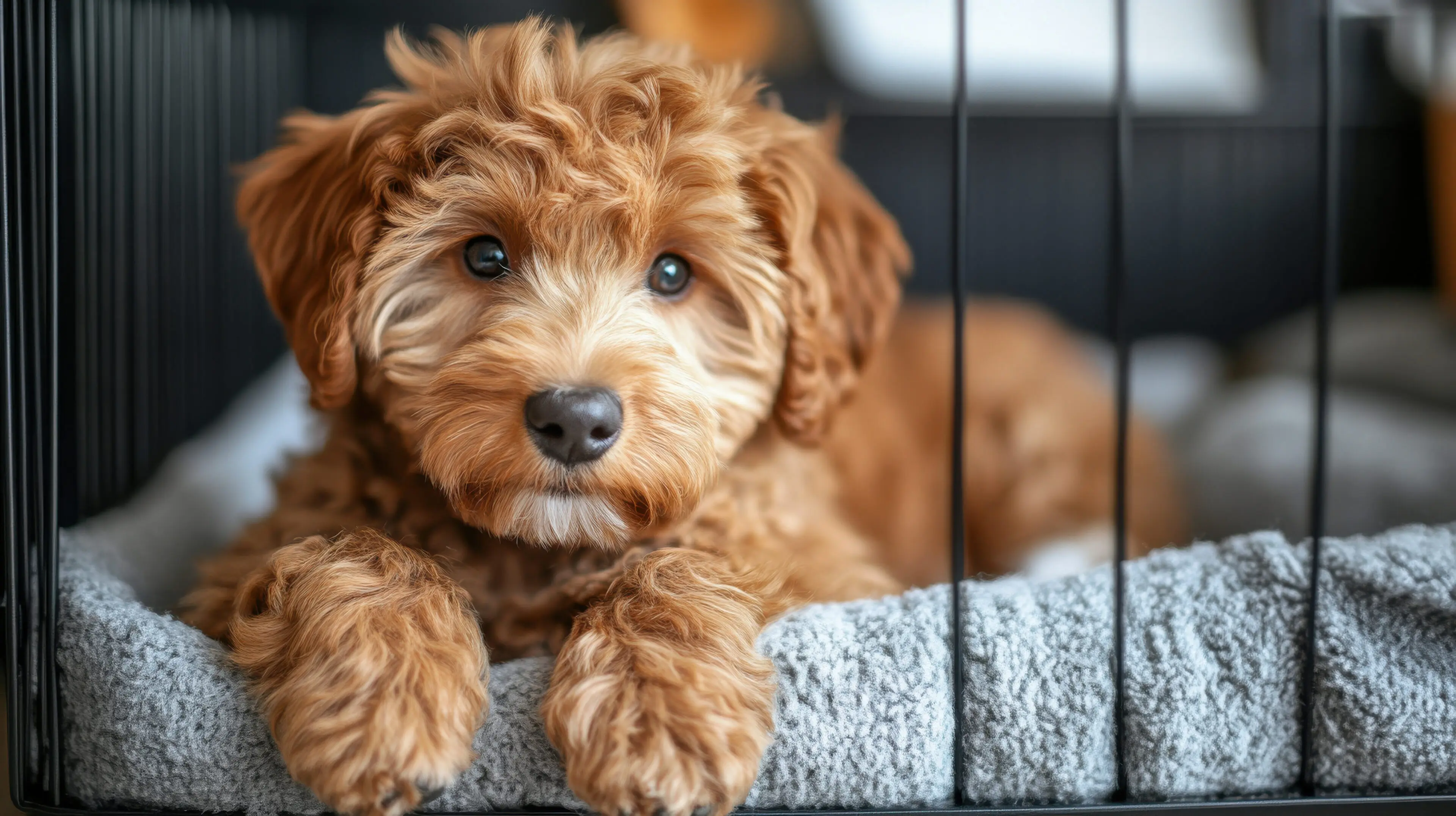
Choose a crate that fits your puppy properly. It needs to be large enough for them to sit, lie down, and turn around comfortably, but small enough to prevent them from using one side as a bathroom. Your goal is to encourage your naturally clean puppy to signal when they need to go outside. They might scratch at the door or whine to let you know. 24-inch crate is ideal for our Mini Goldendoodles and Cavapoos, while a 30-inch crate is best for our Mini Aussiedoodles. A crate with a divider is especially useful, as it allows you to adjust the space as your puppy grows. You will find recommended crates listed on the "Product Recommendations" page!
We have already introduced your puppy to the crate here at Grace Acres! While crate training might initially seem unappealing, it’s actually a highly effective and humane way to help your puppy adapt and learn. Don’t feel uneasy about this practice—it aligns with your dog’s natural instincts. Puppies often seek comfort in small, den-like spaces, and what looks small to us often feels cozy and secure to them.
Avoid covering the crate with a blanket or sheet, as puppies can pull these through the bars, posing a risk of injury. To provide added comfort, we offer a Snuggle Puppy plush that can be sent home with your puppy. Infused with the familiar scent of their mother and littermates, this plush can help ease the transition and make the crate feel even more inviting!
With patience, consistency, and love, crate training can become a valuable tool in establishing routines and building a secure, happy environment for your new companion!
Toys
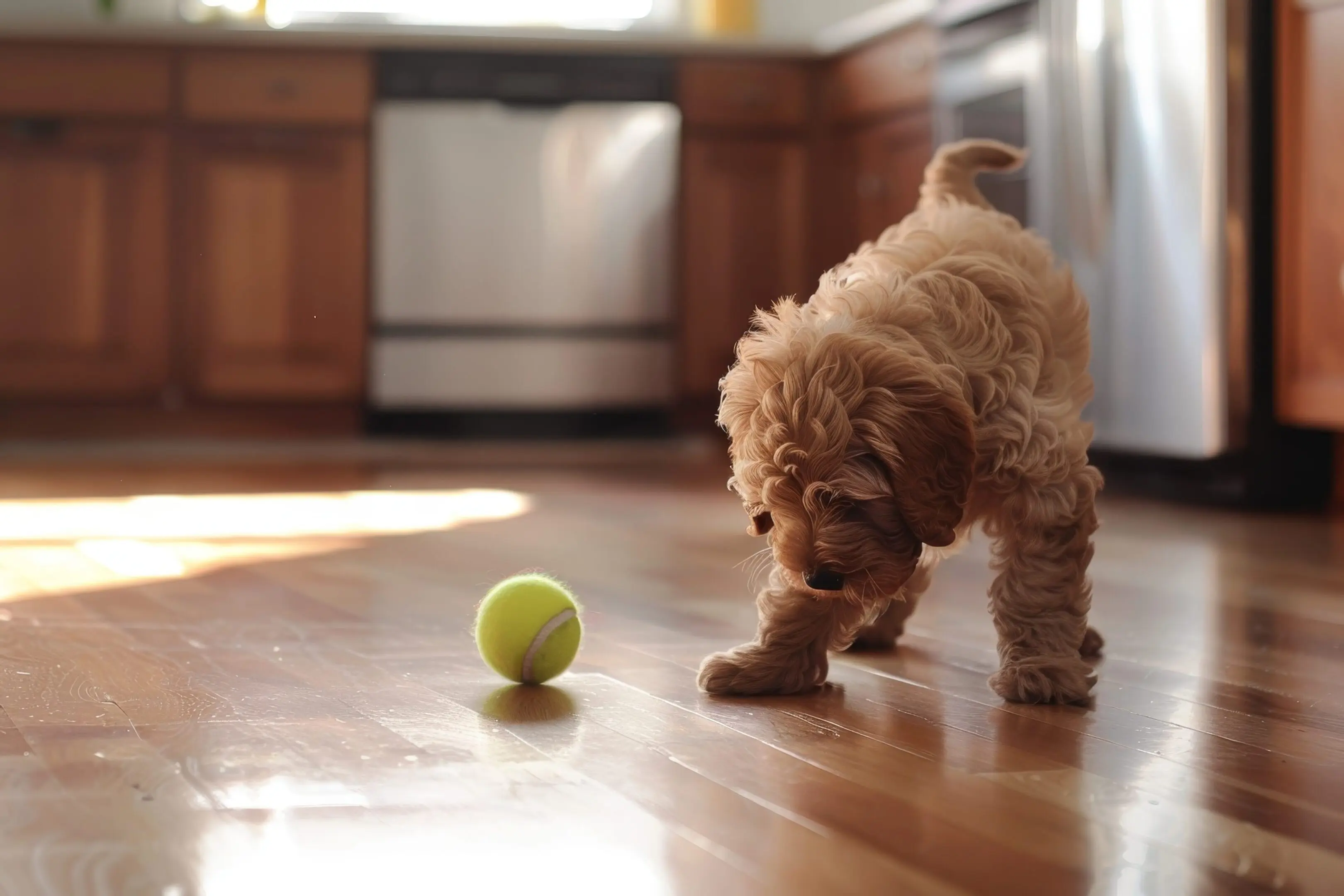
When it comes to toys, it’s best to avoid rawhide or beef hide chews, as they can be challenging to digest and may cause serious blockages or other health risks. Similarly, rope toys require close supervision during play, as their strings can be swallowed and potentially wrap around the intestines, leading to severe complications.
Chewing is a natural behavior for puppies, so it’s important to redirect them calmly when they begin chewing on something they shouldn’t. Use a firm “no,” remove the inappropriate item, and replace it with a safe, puppy-friendly toy. Ensure that plenty of safe toys are readily available to keep your puppy engaged and entertained. For suggestions, visit our product recommendations page for a list of carefully selected toys to suit your puppy’s needs!
Grooming
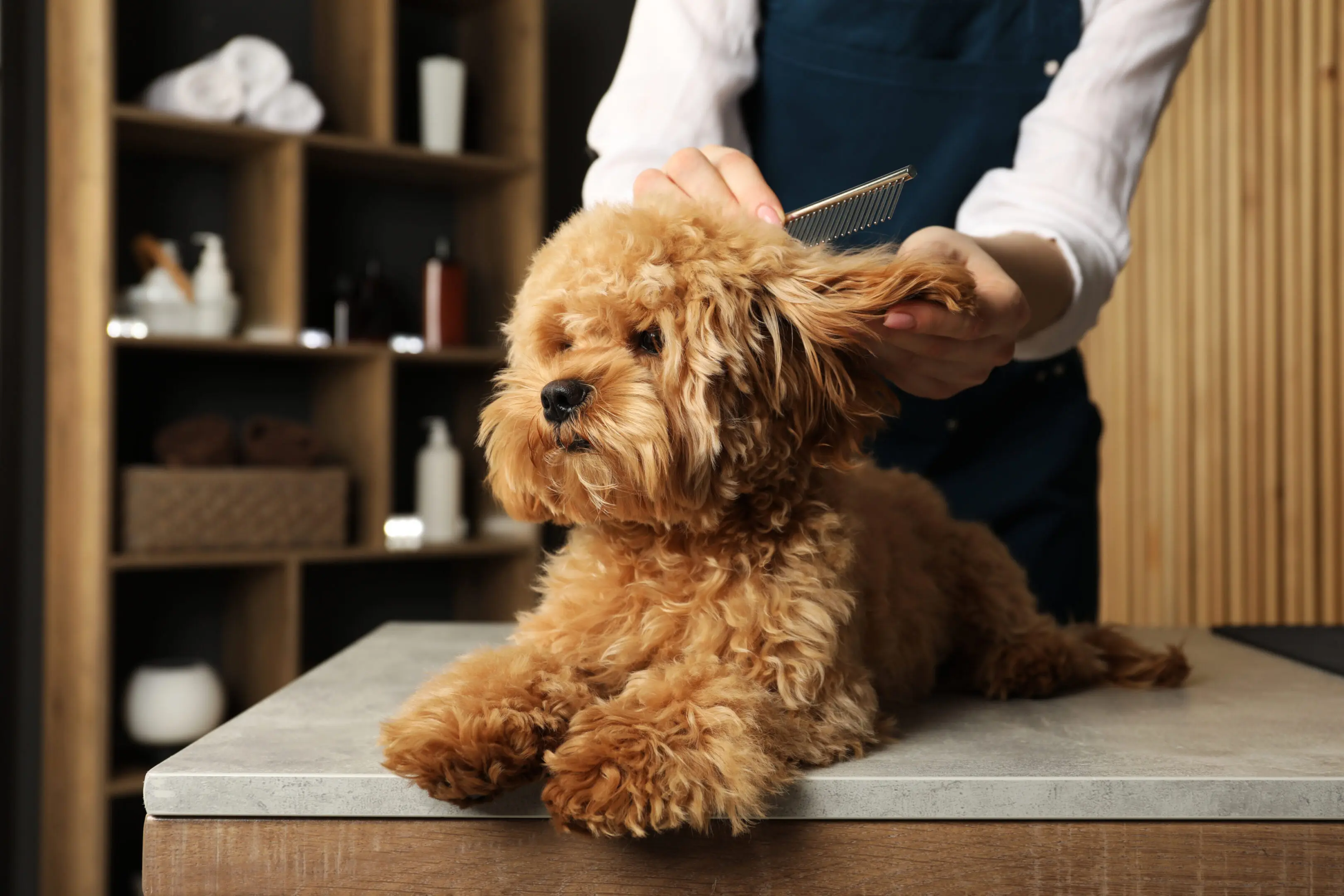
Regular grooming is vital to maintain the health and beauty of a doodle. Their unique coats, often a mix of curly and wavy textures, require consistent care to prevent matting and keep them in optimal condition. Scheduling professional grooming sessions every 6 to 8 weeks is highly recommended to ensure their coat is managed effectively and remains clean and healthy. Routine daily brushing between appointments helps reduce tangles, minimize shedding, and keep their fur free of debris. Grooming also provides an opportunity to keep their skin healthy, detect potential issues early, and maintain a polished appearance. Incorporating regular ear cleaning, nail trimming, and dental care into the grooming regimen further supports their overall well-being. Proper upkeep not only keeps them looking their best but also promotes comfort, hygiene, and a happy, healthy life. For product recommendations such as combs, brushes, and shampoos to help maintain your puppy’s coat, visit our product recommendation page, where you’ll find a curated selection tailored to your puppy’s needs!
General
It is crucial to limit your puppy’s exposure to public places frequented by other dogs until they have completed their full series of puppy vaccines, typically around 16 weeks of age. Many viruses, including the highly contagious parvovirus, can be transmitted through direct contact with other dogs or indirect contact with contaminated objects (such as shopping carts at pet stores, the ground at dog parks, public parks, or veterinary clinics). To ensure the validity of the health guarantee, please schedule an initial wellness visit with your veterinarian within 72 hours of bringing your puppy home.